
Which Water Filter Do I Need? Fixes by Test Result
The right filter matches what your test finds, and EPA names a home fix for each problem below. If you have no result yet, find a free or low-cost test near you.
These are kinds of treatment. Pick a product certified for the contaminant your test found.
Ready to pick one now: choose a filter in three taps.
Reverse osmosis
- Nitrate
- Nitrite
- Arsenic
- Lead
- Copper
- Fluoride
- Uranium
- Total Dissolved Solids (TDS)
- Sulfate
- Chloride
- Sodium
- PFAS (PFOA and PFOS)
Distillation also treats everything here except PFAS (PFOA and PFOS).
Disinfection (chlorination)
Aeration
Point-of-use filter certified to remove lead
Water softener (ion exchange)
Acid neutralization / corrosion control treatment
Granular activated carbon (GAC), anion exchange, or nanofiltration
| Problem | Reverse osmosis | Activated carbon |
|---|---|---|
| Lead | Removes | Removes |
| Copper | Removes | Not covered by CDC or EPA guidance |
| Arsenic | May reduce | Not covered by CDC or EPA guidance |
| Nitrate | May reduce | Not covered by CDC or EPA guidance |
| Fluoride | May reduce | Not covered by CDC or EPA guidance |
| Radium | May reduce | Not covered by CDC or EPA guidance |
| Germs (bacteria and parasites) | Removes | Not for this |
| PFAS (PFOA and PFOS) | more than 90% (EPA) | effective for a period of time (EPA) |
| Taste and smell | Not covered by CDC or EPA guidance | Improves taste and smell (CDC) |
filled = removes, half = may reduce (CDC). Not for this means CDC says that type is not for the job. Not covered by CDC or EPA guidance means those pages do not say.
CDC: "If your tap water does not contain harmful germs or chemicals, you may not need a filter." "Filters remove both good and bad substances from your water."
Sources: CDC, About Choosing Home Water Filters; EPA, Reducing PFAS in Drinking Water with Treatment Technologies. Checked October 17, 2026.
More than one unit
The Minnesota Department of Health says, "No single treatment unit can remove all contaminants in water." To treat more than one problem, you may need several units working together. (Minnesota Department of Health)
Reverse osmosis treats the water at one tap, for drinking and cooking. A sediment pre-filter and an activated carbon pre-filter in front of it help keep the membrane from fouling. If the water has turbidity, iron, manganese, hydrogen sulfide, or chlorine, you may also need a unit on the line where water enters the house. (UMass Extension)
NC State calls whole-house treatment point of entry, and treatment at one tap point of use. For most contaminants, treating only the drinking and cooking water costs less. (NC State Extension)
These notes were read November 22, 2026. UMass quotes are from the archive copy saved February 17, 2026. The fact sheet says last updated June 1, 2007. The live page, https://www.umass.edu/agriculture-food-environment/cafe/fact-sheets/reverse-osmosis-treatment-of-drinking-water-supplies, returned Access denied on November 22, 2026. NC State quotes are from the archive copy saved June 9, 2026, because the live page did not open. That publication's last electronic revision is March 1996.
If your test shows you need a filter
Waterdrop sells reverse osmosis systems, water softeners, and other home filters.
The small commission from purchases made through these links helps keep this free public directory open, at no extra cost to you.
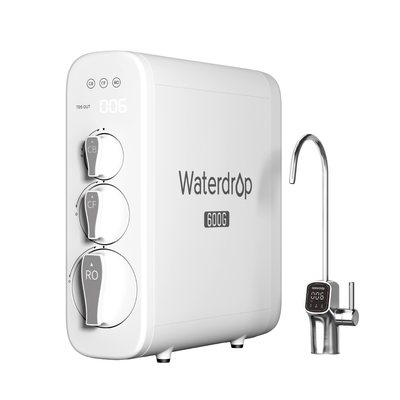
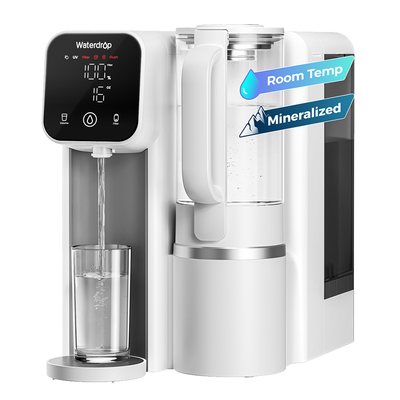
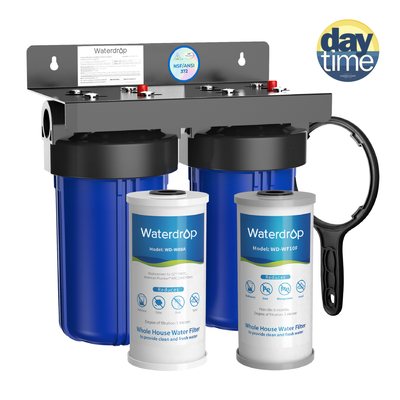


For arsenic or nitrate, look for a reverse osmosis unit certified to NSF/ANSI 58 for that contaminant. For iron or manganese, look for a filter that NSF, IAPMO R&T, or WQA lists for it. Then open the certifier's own listing and check it names the exact model.
For other types, browse all Waterdrop filters.
From EPA and USGS pages checked October 2, 2026.

By Bill Dahlstrom, 15 years in radon mitigation. His company has more than 700 five-star Google reviews. Health facts on this page come from the agencies linked here. About Bill. His water story